A car dealership keeps millions of dollars of inventory outdoors, often behind low fencing and in view of the road. That makes dealerships some of the most exposed businesses served by commercial security services. Effective car dealership security addresses theft of whole vehicles, theft of parts such as wheels and catalytic converters, key theft, vandalism and fraud at the sales desk.
Common Dealership Risks
- Vehicle theft, often using stolen keys or key fobs
- Catalytic converter theft from new and used inventory
- Wheel and tire theft, leaving vehicles on blocks
- Vandalism to windows, paint and signage
- Test drive theft using fraudulent identification
- Service lot theft of customer vehicles awaiting repair
- Break-ins to offices, parts departments and key storage
Protecting Keys
Keys are the single most important control. Many vehicle thefts start with stolen or unsecured keys. Electronic key management systems, locked key cabinets, strict sign-out procedures and end-of-day key counts make it much harder for vehicles to leave the lot.
Lot Layout and Physical Barriers
- Park high-value vehicles nearest the building and under lights
- Block lot entrances after hours with gates, posts or vehicles
- Use wheel locks on display vehicles near the road
- Keep landscaping trimmed to remove hiding spots
- Light the entire lot, including the back rows and service areas
After-Hours Security Coverage
Standing officers
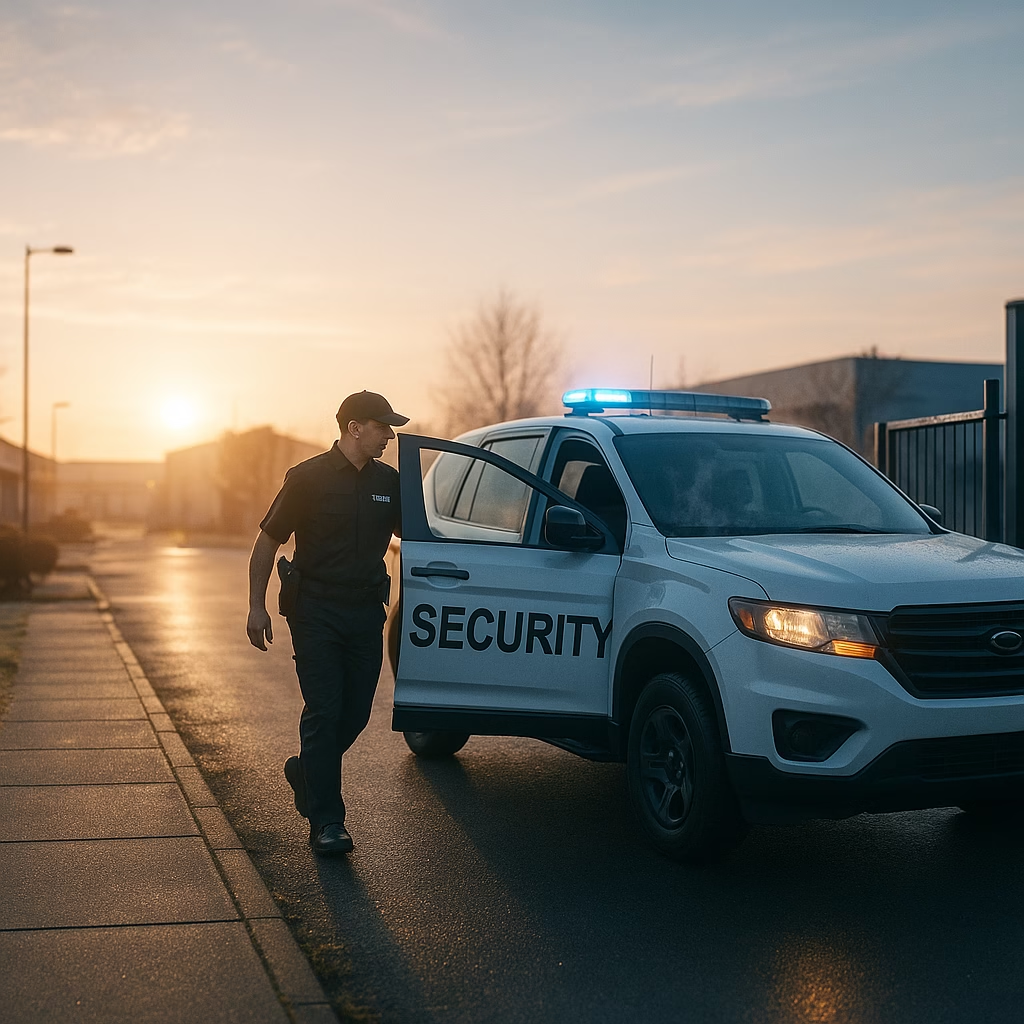
An overnight officer on site provides the strongest deterrence and immediate response. Officers can patrol the lot on foot or in a vehicle, check gates and doors and respond to alarms.
Mobile patrols
For smaller dealerships or lower-risk locations, frequent randomised patrol visits through the night can check the lot and building and address trespassers.
Video with response
Camera systems covering the lot are more effective when someone is ready to respond to alerts, whether an on-site officer or a dispatched patrol.
Daytime Risks Too
Theft is not only an overnight problem. Test drive policies should require verified identification, copies of licenses and, for high-value vehicles, a staff member on the drive. Officers or lot attendants during business hours can watch the lot, greet visitors and discourage opportunistic theft.
Catalytic Converter Theft
Catalytic converter theft can happen in minutes and affect many vehicles in one night. Lighting, camera coverage of the lot, parking vehicles close together and overnight patrols all reduce exposure. The National Insurance Crime Bureau tracks catalytic converter theft trends and recommends similar layered measures.
Service Department Security
Customer vehicles left overnight for service create liability. Secure the service lot, control keys at the service desk and ensure overnight patrols cover customer vehicles as well as inventory.
How National Protective Service Protects Dealerships
National Protective Service designs dealership security around your lot layout, inventory value and incident history. We provide overnight officers, mobile patrols and documented lot checks, and we work with your managers on key control and test drive procedures. Dealerships often combine this with parking lot security for customer areas during business hours.
To protect your inventory, request a security proposal.
Frequently Asked Questions
What is the biggest security risk at a car dealership?
Key control is often the biggest vulnerability, because many vehicle thefts start with stolen or unsecured keys. Catalytic converter and wheel theft are also common.
Do car dealerships need overnight security guards?
Many do, especially dealerships with large outdoor inventories, previous thefts or locations near major roads. Smaller lots may use mobile patrols.
How can dealerships prevent test drive theft?
Verify identification, copy the driver’s license, limit unaccompanied test drives for high-value vehicles and track vehicles with GPS where possible.